Of Science and Scientists; Pure Science and Applied Science
WGBH Educational Foundation · 1957
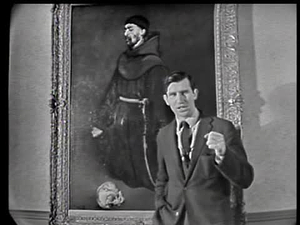
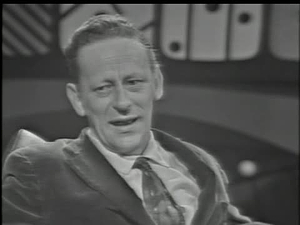
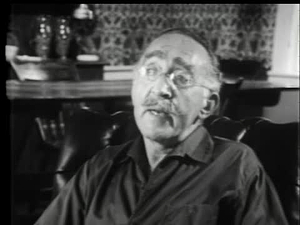
Explains how an understanding of pure science can lead to applied science. Demonstrates this relationship by reviewing a theory of heat and how it led to a number of inventions: smokeless fireplaces, new types of stoves, pressure cookers, and drip-style coffee pots. Features Dr. Sariborn C. Brown, Professor of Physics; Massachusetts Institute of Technology. (Description from NET Film Service Catalog 1960) Sanborn Brown (Associate Professor of Physics, Massachusetts Institute of Technology) warms the bulb of what looks like a large thermometer. Inside the glass tube, chips of amber float in solution. As heat reaches them they react in an odd manner. By an understanding of what happened to the chips of amber as they were warmed, Count Rumford produced a theory and then a number of inventions: smokeless fireplaces, new types of stoves, pressure cookers, drip-style coffee pots. Brown explains the theory and shows the inventions and how they work. Upon such a relationship between research and technology, Professor Le Corbeiller comments, scientific research depends. The equipment used in this episode was loaned to WGBH-TV by the American Academy of Arts and Sciences from its collection of Rumford designs. (Description adapted from documents in the NET Microfiche) Americans tend to think of the sciences as potentially useful (air-conditioning) or potentially troublesome (Strontium-90). We accept or marvel at the revolutionary products of science while giving little thought to the basic ideas, concepts, techniques and logic that have gone into exploring, understanding and explaining our universe or in building our technical civilization. Such an understanding of science does not come easily. Limited by time and opportunity, scientists do not often explain themselves to non-scientists. Also, the quality of science is most difficult to the layman to understand is its indirect approach to the discovery of truths. Robert Frost summed up the problem by commenting that to his mind all science rested on the question, "How she differs from what she's like."Without attempting to teach physics or chemistry or geology, these programs suggest the qualities and outlook of science. By analogy and demonstration, they reveal the ideas which guide scientific research and the truths that research uncovers. They give an appreciation of what the scientist can and cannot do. As one speaker says, "The important thing about science is not merely that it gives rise to technological miracles, but that it provides us with one of many guidebooks we need to find our way in this universe." Today, as non-scientists are called upon to make decisions or concur in decisions that may affect the future of scientific research and even the future of life, a knowledge of "how she differs from what she's like," may not only be useful, but necessary. By explaining and demonstrating the guiding principles of science and scientists, these programs attempt to convey that increasingly necessary knowledge. Produced by WGBH-TV, Boston, the producer-director was David Walker and the executive producer Lawrence Kreshkoff.Dr. Phillipe Le Corbeiller is Professor of Applied Physics and of General Education at Harvard University. He is host and program editor for Harvard in the television series, "Of Science and Scientists." A leader in Harvard's general education program since its beginning in 1946, when he started the course, "Principles of Physical Science," Dr. Le Corbeiller was the first to be appointed professor of General Education in 1949, in addition to being professor of Applied Physics. Throughout the series Dr. Le Corbeiller is joined by other scientists. (Description adapted from documents in the NET Microfiche)
Sign in to order prints, canvas, and more of this work. Browsing and full-resolution downloads stay free.