What's New; Theatre America: Story Theatre
National Educational Television and Radio Center · November 27, 1969
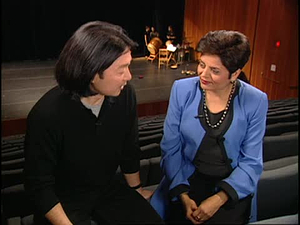
Story Theatre is not just one production, but a theatrical conception. Conceived and originally produced by director Paul Sills in his theater in Chicago, the idea of Story Theatre is an outgrowth of the games theater technique developed by his mother, Viola Spolin, the famous children's educator. Mr. Sills was co-founder and director of the original Second City Troupe, which was also based essentially on the improvisation concept embodied in the games theater technique. Mike Nichols, Elaine May, Alan Arkin, are among the many illustrious "Second City" alumnae. Robert Brustein, dean of the Yale School of Drama, described the Story Theatre idea thus: "It takes narrative fables and stories - either from the Brothers Grimm, Hans Christian Andersen, or medieval legend - and provides them with a life in the theatre through the actor's transforming imagination. Like the Oriental theatre, and the works modeled on this theatre by Yeats and Brecht, 'story Theatre ' is designed to be a pure and naive art. Gestures, mime, and transformation accompany spoken narrative in order to establish the circumstances of each fable; and by discouraging satirical or modernist interpretation of the techniques manages to uncover the dream like, universal reality of the great traditional tales." The dialogue and narrative of each story is as it appears in the original story. Nothing in re-written. It is the way it is staged which brings the story to theatrical life. The five stories chosen for this television version of Yale School of Drama Repertory Theatre production of "Story Theatre" are all taken from Grimm's Fairy Tales: "The Golden Goose;" "The Blue Light;" "The Clever Gretel;" "The Goose Girl;" and "The Bremen Town Musicians." The cast of this production includes professionals, two were in residence at Yale at that time (as was Mr. Sills), graduate (new professionals) and students. Each story and its cast is as follows: "The Golden Goose": Father - Michael Lombard; Eldest Son - David Spielberg; Second Son - David Clennon; Youngest Son - David Ackroyd; Mother - Mildred Dunnock; Man in the Forest - Alvin Epstein; 1st Innkeeper's Daughter - Joan Pape; 2nd Innkeeper's Daughter - Pamela Jones; King - Alvin Epstein; Princess - Barbara Damashek "The Blue Light": Soldier - David Spielberg; King - Michael Lombard; Witch - Mildred Dunnock; Little Man - Alvin Epstein; Princess - Barbara Damashek "The Clever Gretel": Gretel - Mildred Dunnock; Master - Michael Lombard; Guest - Alvin Epstein "The Goose Girl": Queen - Mildred Dunnock; Princess - Pamela Jones; Waiting Woman - Joan Pape; Falada - David Spielberg; Knacker - Michael Lombard; Prince - David Ackroyd; King - Alvin Epstein; Conrad - David Clennon; The Bremen Town Musicians - Ass - Alvin Epstein, Dog - David Spielberg, Cat - Michael Lombard, Rooster - David Ackroyd, Robbers - Joan Pape, David Clennon. Musicians for all five stories: David Ackroyd, Jim Brick, David Clennon, Barbara Damashek. Filler material: During a break in the production, the actors discussed their feelings and thoughts about "Story Theatre," about Paul Sills and about the Yale Repertory Theatre Company. This taped discussion is broken into two segments the first 3 minutes long and the second 5 minutes long which will be used as filler between stories 3 and 4, and stories 4 and 5. NET Playhouse - "Theatre America: Story Theatre" is a National Educational Television production. It was directed for television by Christopher Sarson. Original stage production conceived and directed by Paul Sills, directed in association with Larry Arrick. Produced through the facilities of WGBH, Boston. The program was made possible in part by grants from the National Endowment for the Arts and the Rockefeller Foundation. Filler Information: The filler for "Story Theatre" will be a 20-minute, black-and-white film entitled "Mamako's Baggage." This is the first film by Alexander Neel, a British filmmaker and features Mamako Yoneyama, the Japanese mime who is at present serving as mime coach at the American Conservatory Theatre in San Francisco. "Mamako's Baggage" blends music, dance, drama, photographic imagery and architecture, without dialogue. The action of the film is backed by a musical score by Howard Blake which calls for only three instruments: flute, harp and English horn. Mamako's Baggage" is an allegorical piece of luggage representing the burden of conscience and man's struggle to free himself from psychological and emotional restrictions. In a series of vignettes in front of a row of homes, in a church, at an office plaza, a baggage locker, at an airport the young girl wrestles with her burden. When she manages to rid herself of it, she feels lost. Reunited with it, she accepts it with grateful resignation, for although she cannot exist without it, it prohibits her from enjoying the world around her. In the final sequence of the film, the young girl finally surrenders her "baggage" in death, a death perhaps of the spirit crushed by the mental burden. This aired as NET Playhouse episode 165 on November 27, 1969, as NET Playhouse episode 219 on December 24, 1970, and as What's New episode 397. (Description adapted from documents in the NET Microfiche) What's New is a children's series that ran from 1961-1973. The early seasons typically consist of multiple segments, each from an ongoing series on a specific topic. Each segment was produced by a separate educational broadcasting station, and the linkage between the segments was produced by WHYY and hosted by Al Binford. In episodes from later seasons the format varies more, with many episodes focusing on one story or topic throughout the entire 30 minutes. (Description adapted from documents in the NET Microfiche)
Sign in to order prints, canvas, and more of this work. Browsing and full-resolution downloads stay free.