Digital Commonwealth — Boston Public Library
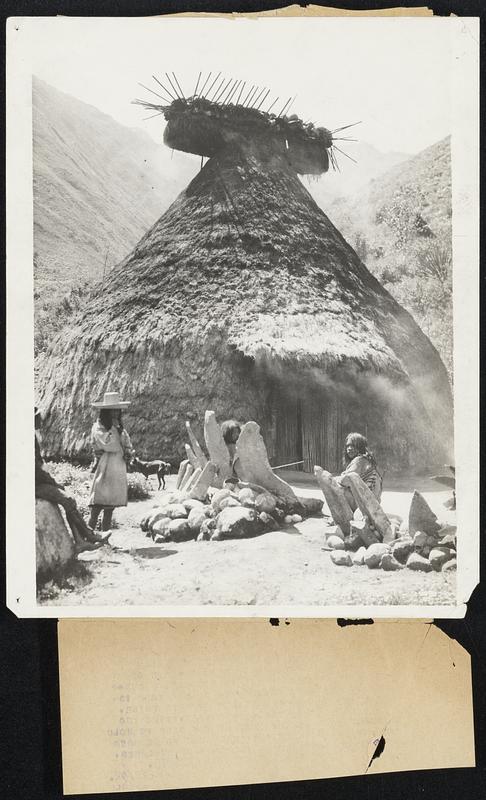
Throwing New Light on the Life of the Early and Modern American Indian. A set of Photographs illustrating the work and adventures of the anthropological expedition under the direction of Gregory Mason, notes archaeologist and author, which has just returned from Colombia, where for six months it carried out work unearthing archaeological and ethnological collections for the Museum of the American Indian, Heve Foundation, New York City, and for the Museum of the University of Pennsylvania. Archaeological exploration and excavation was undertaken along the coast in the Department of Magdalena in an easterly direction from the City of Santa Marta, and in the lower hills of the mountain range known as the Sierra Nevada de Santa Marta. The expedition besides discovering two heretofore unknown sites of ancient towns made extensive excavations in abandoned Indian cemeteries and cities resulting in the collection for the American museum above named of a good deal of ancient pottery, including burial jars and clay whistles, a good many stone axes and a few ornaments of gold. These objects are believed to have been buried before Columbus crossed the Atlantic. The expedition also visited and studied the Goajira Indians and Kagaba-Arhuaco Indians, collecting ethnology, i.e., articles made by these modern natives. The Goajiras on the low sandy Goajira Peninsula. They are a matriarchal tribe, tolerate Polygamy, and permit marriage between their woman and outsiders. The Kagaba-Arhuacos live in the Sierra Nevada de Santa Marta? They are a shy peaceful people, living mainly by agriculture, live a very sedentary life and are absolutely endogamous, not tolerating marriage between their people and outsiders. They have but little polygamy. The husband has one house and the wife another, and neither is supposed to enter the other's dwelling (lovemaking taking place in the fields). The expedition succeeded getting some anthropometrical determinations (physical measurements) of both the tribes, and also some notes on the languages of each.
Wide World Photos, Inc. · [ca. February 1932]
[Information from item housing] Indians: Wire Photos
🔒
Order museum-quality prints
Sign in to order prints, canvas, and more of this work. Browsing and full-resolution downloads stay free.