Digital Commonwealth — Boston Public Library
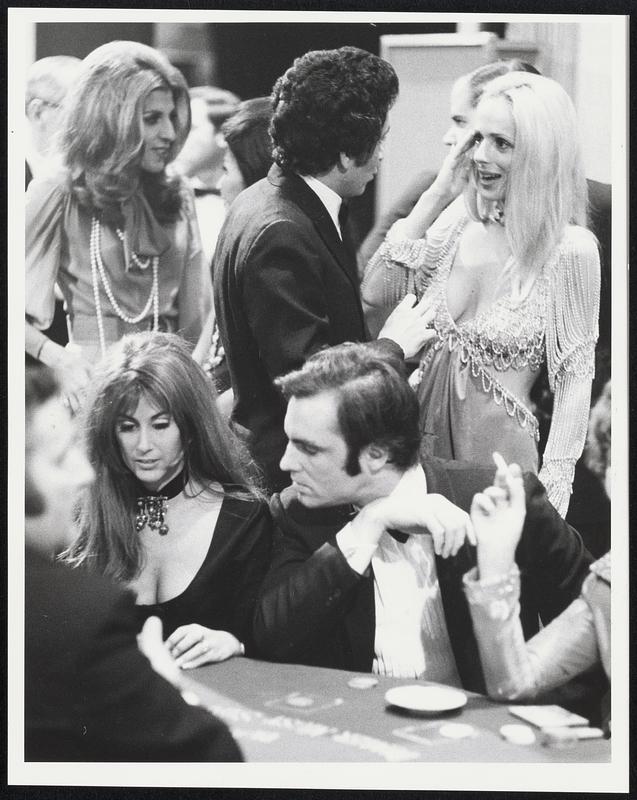
At a New York charity ball the gambling table absorbs the attention of a number of the wealthy patrons. With the loss of innocence in the turmoil of America in the 1970s, righteous cries of nay no longer automatically greet suggestions of legalizing gambling. For example, Earl W. Brydges, majority leader of the New York senate and a long-time foe of state-run gambling, has given up the fight against it. He’s now in favor of going all the way and getting “the greatest revenue from the people who can best afford it.”
[ca. April 1971]
[Information from item housing] Gambling
🔒
Order museum-quality prints
Sign in to order prints, canvas, and more of this work. Browsing and full-resolution downloads stay free.