NET Journal; Television and the White House
National Educational Television and Radio Center · February 26, 1968
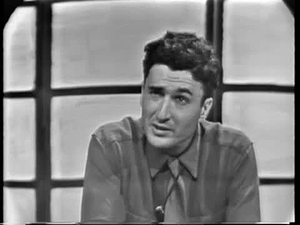
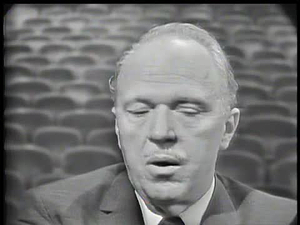
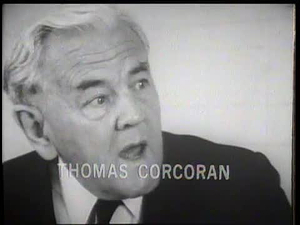
NET JOURNAL -- "Television and the White House": Television news coverage at the White House, is discussed by former Presidential press secretaries James C. Hagerty, Pierre Salinger, and Bill D. Moyers, and newsmen Edward P. Morgan, Frank McGee, and Dan Rather. This episode, much of which was carried live on WNDT Channel 13 and other Eastern stations, features the recollections of three former Presidential Press Secretaries on the growth of television coverage of the White House and its uses (and occasional abuses) by the President. Participants are ex-secretaries Pierre Salinger, James Hagerty, and Bill D. Moyers; and newsmen Dan Rather, Frank McGee, and Edward P. Morgan. Highlights follow: Salinger: "Both the Kennedy and Johnson administrations have tried to put the best possible face on Vietnam, even at times when the facts would show to the contrary. I think that some of the predictions that were made about how soon the war would end? have led to the serious problems that the current administration has with the American people on Vietnam. " Moyers, questioning "whether or not it is right or fair or wise for one man to have to work within an inherited situation," elaborates: "Mr. Kennedy was a superb performer before television; Mr. Johnson is not... I just don't think television is suited to every President's using it." Among the episode's highlights are Moyers' recounting of the day when LBJ was being admitted secretly into Bethesda Hospital upon closing of the stock market; Salinger's explanation of the handling of the Cuban crisis; and Hagerty's recollections on the inclusion of television correspondents in the Presidential pool. Additional Description from NET Press Release: Three former Presidential press secretaries reveal reasons for the deepening ''credibility gulch" on NET Journal -- "Television and the White House.?2028Pierre Salinger, who served under Presidents Kennedy and Johnson, concedes that both Administrations contributed to the present dissatisfaction over Vietnam by trying "to put the best possible face on Vietnam, even at times when the facts would show to the contrary." Bill Moyers, a more recent Johnson aide, stresses the need for secrecy in many major policy matters. In the aftermath of the Pueblo incident, "the Administration permitted the press to hustle its priorities and? succumbed all too quickly to the appetite of the press for comment." Other panelists are former Eisenhower aide James Hagerty and newsmen Dan Rather of CBS, Frank McGee of NBC, and moderator Edward P. Morgan of the PBL of NET. The episode was taped February 14 at the meeting of the New York Chapter of the Television Academy of Arts and Sciences, held in the New York Hilton. Moyers is critical of the fact that one man must ?work within an inherited situation." Specifically, "Mr. Kennedy was a superb performer before television; Mr. Johnson is not.... I don't think television is suited to every president's using it." Moyers also recounts the day when Mr. Johnson waited until the stock market closed before admitting that he was entering Bethesda Hospital. Salinger describes the subterfuge involved in President Kennedy's movements on the weekend prior to the Cuban missile crisis. And Hagerty elaborates on his decision to include television correspondents in the President's regular news pool. NET Journal ? "Television and the White House" is a production of National Educational Television. Executive producer: A. H. Perlmutter. The episode runs approximately an hour and was recorded on videotape. (Description adapted from documents in the NET Microfiche)
Sign in to order prints, canvas, and more of this work. Browsing and full-resolution downloads stay free.