Oral history interview with Marlene Stephens
Boston (Mass.). Office of the Mayor · [ca. 1975–1976]
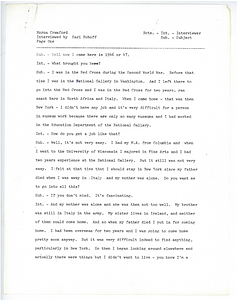
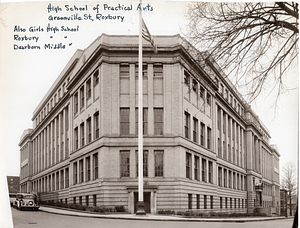
Oral history interview with Marlene Stephens. Stephens was born in 1933 after her mother emigrated from Jamaica in 1915. She describes growing up in a majority-Black neighborhood on Northampton Street, and discusses her perception of the gradual decline of the area due to urban renewal beginning in around 1946. She shares her appreciation for the convenient location and racial diversity of the South End. Stephens discusses Boston’s desegregation program, specifically the busing of South End children into South Boston, and the effects of racial violence on Black children. Stephens also discusses the living conditions in the Cathedral Housing Project, where she and her family were located. Other topics mentioned include Dover Street, Camden Street, New York Streets area, Shawmut Street, Tremont Street, Massachusetts Avenue, Columbus Avenue, Hammond Street, Humboldt Avenue, Berkeley Street, Walnut Avenue, L Street Annex, Smith Street, Joy Street, Southwest Expressway, Columbia Point, Lower Roxbury, Beacon Hill, Jamaica Plain, Birmingham, Arkansas, New York, St. Kitts, the Hi Hat Club, the E. M. Loew’s Puritan Theatre, the Robert Gould Shaw House, the Lenox Street Housing Project, the Charlestown Navy Yard, the Metro-North Railroad, METCO Incorporated, the African Meeting House, the Black Heritage Trail, the Boston Housing Authority (BHA), the Boston Latin School, the Charles E. Mackey School, Massachusetts College of Art and Design, South Boston High School, Clarence R. Edwards Middle School, James W Hennigan School, Boston Technical High School (now John D. O'Bryant School of Mathematics and Science), Saint Joseph’s Preparatory High School, Girls High School, and Massachusetts House Representative Byron Rushing.
Sign in to order prints, canvas, and more of this work. Browsing and full-resolution downloads stay free.