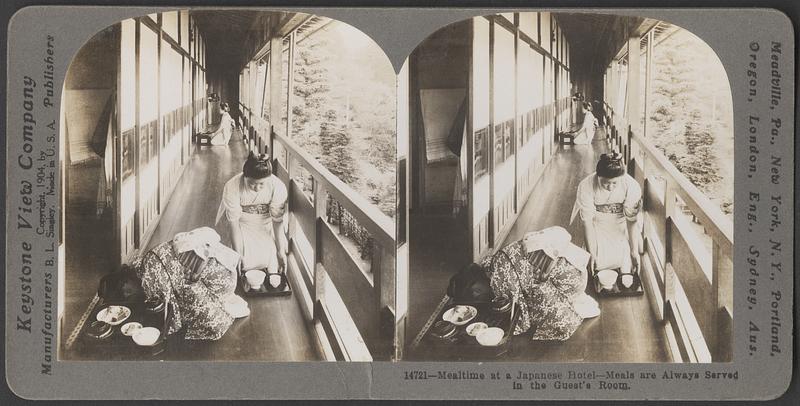
Meal time at a Japanese hotel
Singley, B. L. (Benjamin Lloyd) · (c) 1904–1905
The Japanese meal is not based on the idea that we must eat to live; it has almost nothing in common with feeding animals Instead, a meal is always a polite ceremony and an expression of art. "Everything," observes Regamey, "serves them as a pretext for ornamental pieces, for picturesque arrangement. The dishes are dressed with taste, their colors matching one another and set of with the varieties of verdure which bring out their varied tones; it is like culinary jewelry executed for the pleasure of the eyes." The waitress is the incarnation of courtesy. On her knees she presents the food to the guest, who sits on the floor beside a small, low table. No knives, forks, or spoons are used, except where foreigners have introduced them; chop-sticks are the only table cutlery. The food is always scrupulously clean; but it seems to foreigners, more tasteful in appearance than tasty in its substance, more beautiful than palatable. Among the articles commonly served are bean-soup, broiled fish, omelette, thin biscuits, chicken stew, sweet bean paste, and sponge cake. Tea is the universal drink.
Sign in to order prints, canvas, and more of this work. Browsing and full-resolution downloads stay free.