Kaleidoscope; Bill Cosby
Kassel, Virginia · September 1, 1963
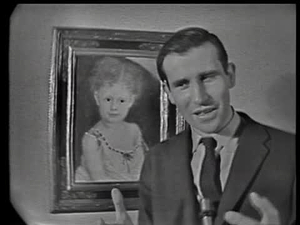
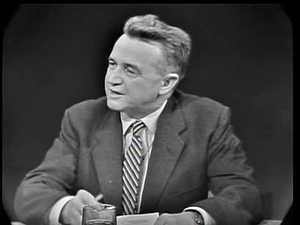
Conversation 1968 - "Bill Cosby:" Two-time Emmy award-winning Negro comedian Bill Cosby discusses his role in the discontinued NBC "I Spy" series, his comedy style, his belated education, his childhood struggles, and his success in show business. In deploring the roles of black actors in television and radio, Bill Cosby says he is very pessimistic about the racial situation being shown as it really is and believes that documentaries, even in the form of dramatization, offer the only hope. He believes documentaries show it as a problem "because that's the only way the writer feels he can get the point across." Cosby added, "And I think that we can gain a lot if we learn to accept the fact that the problems of bigotry and racism exist in this country. I think most bigots understand the problem. They just don't want to accept it." Explaining how his comedy is based on an exaggeration of events from his childhood, he said that this father left his mother and he became head of the household at an early age. One of his duties was making waffles every morning, and he became so tired of looking at the same old waffles that he started adding food coloring to the better. "I love purple waffles --- green, orange, red waffles. I loved them for some reason, and I could never understand why my mom never dug them," he added. He dropped out of school and joined the Navy but decided to complete his education he grew tired of taking orders from men whom he considered "dumb." He was admitted to Temple University as "a frightened, twenty-three-year-old freshman" on an athletic scholarship and ended up on the Dean's list. Cosby detests one feature about being a well-known star - loss of anonymity and the chance for personal contact. Conversation 1968 - "Bill Cosby" is a National Educational Television presentation, produced by KQED, San Francisco. (Description adapted from documents in the NET Microfiche) Kaleidoscope consists of at least 9 half-hour episodes produced in 1963 by KQED, which were originally shot on videotape.
Sign in to order prints, canvas, and more of this work. Browsing and full-resolution downloads stay free.