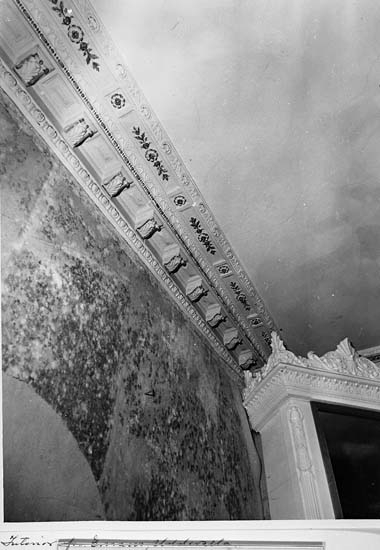
Emaus was originally one of three torches under Bodele, Upper Bodele or Hungerhult. The pit is on Kempenskjöid’s map of 1696. In 1708, Pehr Schauw bought the meadow on Hungerhult, in 1738 the name was changed to Emaus and is related to the Pietistic Revival movement, which was dragging through the country at this time. Emaus is Uddevalla’s first spoken landscape, with its advent around 1740. The transition from torp to landscaping became noticeable. The Torp hut was replaced with a mansion like building. The landers were farms that were used and inhabited by citizens from the city. Henrik Bratt’s son-in-law of Pehr, inherited Emaus, he was assisted by a drone on his home road from the Kyndelmässo market in 1763. Sofia Almgren, a widow of Councillor Christoffer Busck, rented Emaus around 1810 until his death in 1826, the son took over until 1841, after Buscks was owned Emaus by J G Forsström until 1862, then the Reichstag Fredrik Pettersson lived there, in 1907 Gustav Lönner switched to Emaus against Hensbacka. The municipality bought Emaus 1965 from the sterb house after the major Gustav Lönner for SEK 495.000, since 1967 it is a nature reserve.
Unknown
Emaus was originally one of three torches under Bodele, Upper Bodele or Hungerhult. The pit is on Kempenskjöid’s map of 1696. In 1708, Pehr Schauw bought the meadow on Hungerhult, in 1738 the name was changed to Emaus and is related to the Pietistic Revival movement, which was dragging through the country at this time. Emaus is Uddevalla’s first spoken landscape, with its advent around 1740. The transition from torp to landscaping became noticeable. The Torp hut was replaced with a mansion like building. The landers were farms that were used and inhabited by citizens from the city. Henrik Bratt’s son-in-law of Pehr, inherited Emaus, he was assisted by a drone on his home road from the Kyndelmässo market in 1763. Sofia Almgren, a widow of Councillor Christoffer Busck, rented Emaus around 1810 until his death in 1826, the son took over until 1841, after Buscks was owned Emaus by J G Forsström until 1862, then the Reichstag Fredrik Pettersson lived there, in 1907 Gustav Lönner switched to Emaus against Hensbacka. The municipality bought Emaus 1965 from the sterb house after the major Gustav Lönner for SEK 495.000, since 1967 it is a nature reserve.
Sign in to order prints, canvas, and more of this work. Browsing and full-resolution downloads stay free.