Bohuslän Museum
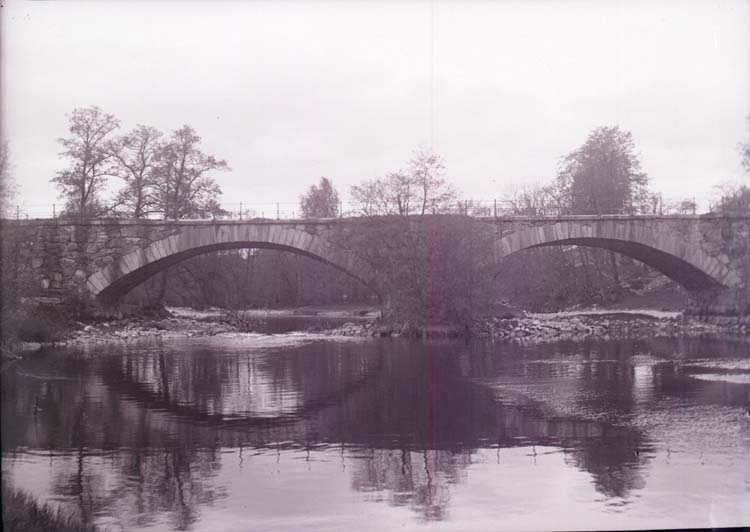
Enligt text som medföljde bilden: "Kvistrum. Landsvägsbron. Maj 1905."
Hallgren, Hugo
CC0 — Public Domain
Bohuslän Museum
Enligt text som medföljde bilden: "Kvistrum. Landsvägsbron. Maj 1905."
🔒
Order museum-quality prints
Sign in to order prints, canvas, and more of this work. Browsing and full-resolution downloads stay free.
More from Bohuslän Museum
Bohuslän Museum
Enligt text som medföljde bilden: "Bro. Utbypasset. Aug. 12."
Hallgren, Hugo
Bohuslän Museum
The original is in the next-archive.
Gustafsberg The Hot Bathing House t.v. o “The Neck” t.h.
The building of the house-bath house consists of two perpendicular bodies with the same roof height and approximately the same proportions. In the encounter between the squatters there is an octagonal tower with pointed hood, housed two wooden cisterns. All three sides of the eastern wing run a porch. The façades have lying chipped panel that is yellowish-painted. The half-floor under the roof falls has a circular window in each axis. The fodder, moldings and lisenes present are green-colored.
The wing that lies straight out of the shoreline is the original one and was erected in the water, with a land connection through a swath. However, the distinguishable gable portion towards the land side is built at the beginning of this century. The water tower is one of the stages when it was built on the shoreline parallel wing.
In 1814, the foundation erected the large hot-bathhouse, to the interior with a middle corridor and along its sides lying bathhouses and changing rooms, together six such doubles. At first, only the gable was panelled against land. In 1872-73 the later wing was built with different rooms for cold water plant and boiler room.
The “crack” is elongated and erected in one floor with wide front pies at both long sides, which, however, do not go outside the facade lif. In front of the front of the lake side there is a balcony supported on columns. The facades have a lid list panel and a tooth cut frieze sits at the roof. In the gable outer corners of the frontons are semi-circular windows. Light green facade paint.
The “crack” belongs to the shipyards, even though the building is close to the shore. It has served as a bath-guest residence at this location from the outset, where it was moved through the shipyard owner Engelkes from having previously been a simple bod. Of course, the rebuilding of this bod has been a major step towards Engelke’s creation of a lodging building of the next standard as “The Soap.” The “snack” is today a café building, but the older plan shape is slightly altered.
“The Neck” was set up at this place in 1837.
Source: “Gustafsberg. A seaside resort and children’s house environment in Bohus:, p. 23 o 45.”
Maria Lundbäck was born in Uddevalla, where the father was a brewery owner.
She learned the photograph from photographer Josefina Rydholm. Eventually, Maria took over the studio in the South Queen Street 13. Subsequently, in 1883, she opened her own studio on 11 Lagerberg Street. In addition, she had for some time a branch in Trollhättan. It was as a portrait photographer that she became known, she received many awards and awards for her professional skill. She was also active in photodocumenting different events in the city, exhibitions business and industries. The photographs are now in the photo archive of the Museum of Bohusläns.
Her tomb is in the North Cemetery in Uddevalla. Source: “Uddevalla sooner - a picture book p. 177” by Hugo Olsson.
Lundbäck, Maria
Bohuslän Museum
Landscape. County of Bohus.
The Murray family in the garden.
Hallgren, Hugo
Bohuslän Museum
Landscape. Västergötland
Gösta Vilhelm Andersson born 1904-10-17. The employment period was 52 years.
Employed 1917-11-05.
He worked in the work department Mechanical workshop and office.
He was retired 1969-10-31.
Unknown