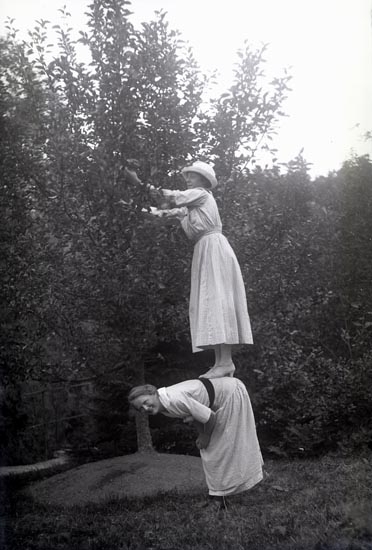
The two women in the garden are Hanna Rohdiner, the Labour in the Ramdalen Trade Garden, with Svea Thorsell on her back. Per LUDVIG COLLIJN Ludvig Collijn laid the trade garden on Ramdalen, former Torp under Cederslund, which his brother-in-law owned. The year was 1914. Telephone conversation with Birgitta Oscarsson in February 2008; research Marie Johansson, Bohusläns museum. The chairman of the Skredsviks-Herrestads-Höås homestead association Birgitta Oscarsson (born 1938) is a respondent of the pictures from the trading garden in Ramdalen. Her data is based on information that “de gamle” has told. No archival material from the trade garden is in the ownership of the homestead association. In the Remark Field, Collijn’s House is called, inter alia: “Great Villa, Ramdalen.” Per Ludvig Collijn The father was also a merchant in the capital; Ludvig Collijn student accommodation in Djurholm’s condominiums enl. The population of Sweden 1900. Brooks to the owner of Cederslund’s farm in Skredsvik. In 1902 Ernst Ivan Lorenzo Lundström, born in 1877, took up the estate of Cederslund. He was married to Carin Brynhilda, born Tengstedt in Gothenburg in 1882. The villa that Allan Jacobi had built in Ramdalen (formerly a torp) around the turn of 1900 was taken over as a summer residence for the Collijn family and the land was turned into a trading garden. Ludvig Collijn was married to Ingrid Charlotta Collijn, born Tengstedt in Gothenburg (1878-1978). Her last address was St EriksHennes 53 A, Stockholm according to Sweden’s death book 1947-2006. Groshandler Collijn lived there in summer, in Stockholm the second part of the year. The garden around the house was accessible and used by the service people which one can see on the many photos taken by Karl Josefsson-Björk. The photographer Karl Josefsson-Björk and his brother Johan Josefsson worked in the trade garden. Their father was a gardener (and a superintendent one can probably say) for Collijn. Many students from near and far received practice and work in the trading garden, several returned year after year. Wooden boxes of fruit and vegetables were transported to Hogstorp railway station for further transport by train to the capital. Some were also sold to traders in Lysekil and Uddevalla. The port of Gullmarsfjord is probably also used for shipping products. In the mid-1930s, parts of Ludvig Collijn’s domains turned into holiday facilities for employees at Schwartzman & Nordström, Uddevalla. BO believed that Johan Josefsson, the brother of the photographer, had some kind of tenancy in Ramdalen because at an outing with his school on SmåB, BO and her classmates had been admitted to newly traded tomatoes from his greenhouse. It was around 1949-50. The area was used from 1952 by the Swedish Armed Forces; the Rifle Division on the Skredsvik Base. In 2008, the house is called “Alpvillan” and is used as a mess by the Swedish Armed Forces' Röjdykardivision, which operates on the Skredsvik base... It is the same house, the “Strandvillan,” which engineer Jacobi built in 1900 and which Ludvig Collijn took over in 1913-14 to have as a summer villa while running a trading garden in Ramdalen, Skredsvik. Of the garden, nothing remains. The large fountain bowls that one can see in several of the photos of Karl Josefsson-Björk are supposed to have been sold in the 1950s. Retrieved from the Swedish Armed Forces website: In 1952, Rolf Hamilton started the first Swedish military diver school. Hamilton, recently born from the US Navy SEAL 's grubbing and attack divers training in the United States, gave the training to Skredsvik on the west coast. This has since been the residence of the divers. At Röjdykardivision, the Navy’s divers, both conscripts and officers, are trained one twenty-fifth each year. In addition, annual tests, entertaining dive training for divers and other divers are carried out in active service, training for diving divers and training in ammunition clearing on and below the water surface. Amusing dive training is also carried out for personnel within the Swedish Rescue Service and the Police. In total, a year is going through approx. 200 people different training courses that have a length from two weeks up to one year. The flue diver division is ideally located at Gullmarsfjord, which is both protected for bad weather and sufficiently deep for the dive training. The advent and oldest history of Stockholm’s Chess Society Collijnepoken: In 1896, two brothers - Gustaf and Ludvig Collijn - became members of the club. they had made an extensive journey around Europe in the same year with their family. They had i.a. visited chess clubs and acquired the latest in a chess road and wanted to reform and revolutionize their entrance in the club the rich but perhaps a somewhat conservative. Bl. a. they wanted the club to start participating in competitions and organise them. One had played without a chess until then and the parties could hold on for days and weeks. This changed with the brothers Collijn introducing the chess. At the turn of the century, telephone matches were organised between Stockholm, Gothenburg and Uppsala. During Ludvig Collijn’s presidency (1904-1939), Sällskap, stockholmsschacket and Swedish chess flourished at all. The brothers Collijn also published a textbook in chess, which appeared in several editions. The scarcity of strong players from the beginning of the 19th century can be mentioned Fritz Englund and Gustaf Nyholm, our first Swedish champion in chess. In 1898-1912 international tournaments were organized in Stockholm. In 1911, at the initiative of Ludvig Collijn Stockholm’s Chess Federation. In 1912, Stockholms Schackarrangarranged in connection with The Congress of the Nordic Chess Federation a major international tournament with Aljechin as victor. Ludvig Collijn invited foreign grandmasters to Sweden to raise our standard of play. Ludvig Collijn, as a chess promoter, organizer and mecenate, has had a decisive influence on Swedish chess. The landscape had its great flowering time in the early 19th century. From the 20th century the activity became lower and only in the 60s did Sällskapet begin to make a new claim, including: through series games in Stockholm DM. In 1978, the 100th anniversary of Collijn’s birth was celebrated and, in connection with this, the Sällskap, under its then chairman Bertil Molander, arranged a match between the veterans of the Sällskap and stockholmsjuniors.
Josefsson-Björk, Karl
The two women in the garden are Hanna Rohdiner, the Labour in the Ramdalen Trade Garden, with Svea Thorsell on her back. Per LUDVIG COLLIJN Ludvig Collijn laid the trade garden on Ramdalen, former Torp under Cederslund, which his brother-in-law owned. The year was 1914. Telephone conversation with Birgitta Oscarsson in February 2008; research Marie Johansson, Bohusläns museum. The chairman of the Skredsviks-Herrestads-Höås homestead association Birgitta Oscarsson (born 1938) is a respondent of the pictures from the trading garden in Ramdalen. Her data is based on information that “de gamle” has told. No archival material from the trade garden is in the ownership of the homestead association. In the Remark Field, Collijn’s House is called, inter alia: “Great Villa, Ramdalen.” Per Ludvig Collijn The father was also a merchant in the capital; Ludvig Collijn student accommodation in Djurholm’s condominiums enl. The population of Sweden 1900. Brooks to the owner of Cederslund’s farm in Skredsvik. In 1902 Ernst Ivan Lorenzo Lundström, born in 1877, took up the estate of Cederslund. He was married to Carin Brynhilda, born Tengstedt in Gothenburg in 1882. The villa that Allan Jacobi had built in Ramdalen (formerly a torp) around the turn of 1900 was taken over as a summer residence for the Collijn family and the land was turned into a trading garden. Ludvig Collijn was married to Ingrid Charlotta Collijn, born Tengstedt in Gothenburg (1878-1978). Her last address was St EriksHennes 53 A, Stockholm according to Sweden’s death book 1947-2006. Groshandler Collijn lived there in summer, in Stockholm the second part of the year. The garden around the house was accessible and used by the service people which one can see on the many photos taken by Karl Josefsson-Björk. The photographer Karl Josefsson-Björk and his brother Johan Josefsson worked in the trade garden. Their father was a gardener (and a superintendent one can probably say) for Collijn. Many students from near and far received practice and work in the trading garden, several returned year after year. Wooden boxes of fruit and vegetables were transported to Hogstorp railway station for further transport by train to the capital. Some were also sold to traders in Lysekil and Uddevalla. The port of Gullmarsfjord is probably also used for shipping products. In the mid-1930s, parts of Ludvig Collijn’s domains turned into holiday facilities for employees at Schwartzman & Nordström, Uddevalla. BO believed that Johan Josefsson, the brother of the photographer, had some kind of tenancy in Ramdalen because at an outing with his school on SmåB, BO and her classmates had been admitted to newly traded tomatoes from his greenhouse. It was around 1949-50. The area was used from 1952 by the Swedish Armed Forces; the Rifle Division on the Skredsvik Base. In 2008, the house is called “Alpvillan” and is used as a mess by the Swedish Armed Forces' Röjdykardivision, which operates on the Skredsvik base... It is the same house, the “Strandvillan,” which engineer Jacobi built in 1900 and which Ludvig Collijn took over in 1913-14 to have as a summer villa while running a trading garden in Ramdalen, Skredsvik. Of the garden, nothing remains. The large fountain bowls that one can see in several of the photos of Karl Josefsson-Björk are supposed to have been sold in the 1950s. Retrieved from the Swedish Armed Forces website: In 1952, Rolf Hamilton started the first Swedish military diver school. Hamilton, recently born from the US Navy SEAL 's grubbing and attack divers training in the United States, gave the training to Skredsvik on the west coast. This has since been the residence of the divers. At Röjdykardivision, the Navy’s divers, both conscripts and officers, are trained one twenty-fifth each year. In addition, annual tests, entertaining dive training for divers and other divers are carried out in active service, training for diving divers and training in ammunition clearing on and below the water surface. Amusing dive training is also carried out for personnel within the Swedish Rescue Service and the Police. In total, a year is going through approx. 200 people different training courses that have a length from two weeks up to one year. The flue diver division is ideally located at Gullmarsfjord, which is both protected for bad weather and sufficiently deep for the dive training. The advent and oldest history of Stockholm’s Chess Society Collijnepoken: In 1896, two brothers - Gustaf and Ludvig Collijn - became members of the club. they had made an extensive journey around Europe in the same year with their family. They had i.a. visited chess clubs and acquired the latest in a chess road and wanted to reform and revolutionize their entrance in the club the rich but perhaps a somewhat conservative. Bl. a. they wanted the club to start participating in competitions and organise them. One had played without a chess until then and the parties could hold on for days and weeks. This changed with the brothers Collijn introducing the chess. At the turn of the century, telephone matches were organised between Stockholm, Gothenburg and Uppsala. During Ludvig Collijn’s presidency (1904-1939), Sällskap, stockholmsschacket and Swedish chess flourished at all. The brothers Collijn also published a textbook in chess, which appeared in several editions. The scarcity of strong players from the beginning of the 19th century can be mentioned Fritz Englund and Gustaf Nyholm, our first Swedish champion in chess. In 1898-1912 international tournaments were organized in Stockholm. In 1911, at the initiative of Ludvig Collijn Stockholm’s Chess Federation. In 1912, Stockholms Schackarrangarranged in connection with The Congress of the Nordic Chess Federation a major international tournament with Aljechin as victor. Ludvig Collijn invited foreign grandmasters to Sweden to raise our standard of play. Ludvig Collijn, as a chess promoter, organizer and mecenate, has had a decisive influence on Swedish chess. The landscape had its great flowering time in the early 19th century. From the 20th century the activity became lower and only in the 60s did Sällskapet begin to make a new claim, including: through series games in Stockholm DM. In 1978, the 100th anniversary of Collijn’s birth was celebrated and, in connection with this, the Sällskap, under its then chairman Bertil Molander, arranged a match between the veterans of the Sällskap and stockholmsjuniors.
Sign in to order prints, canvas, and more of this work. Browsing and full-resolution downloads stay free.