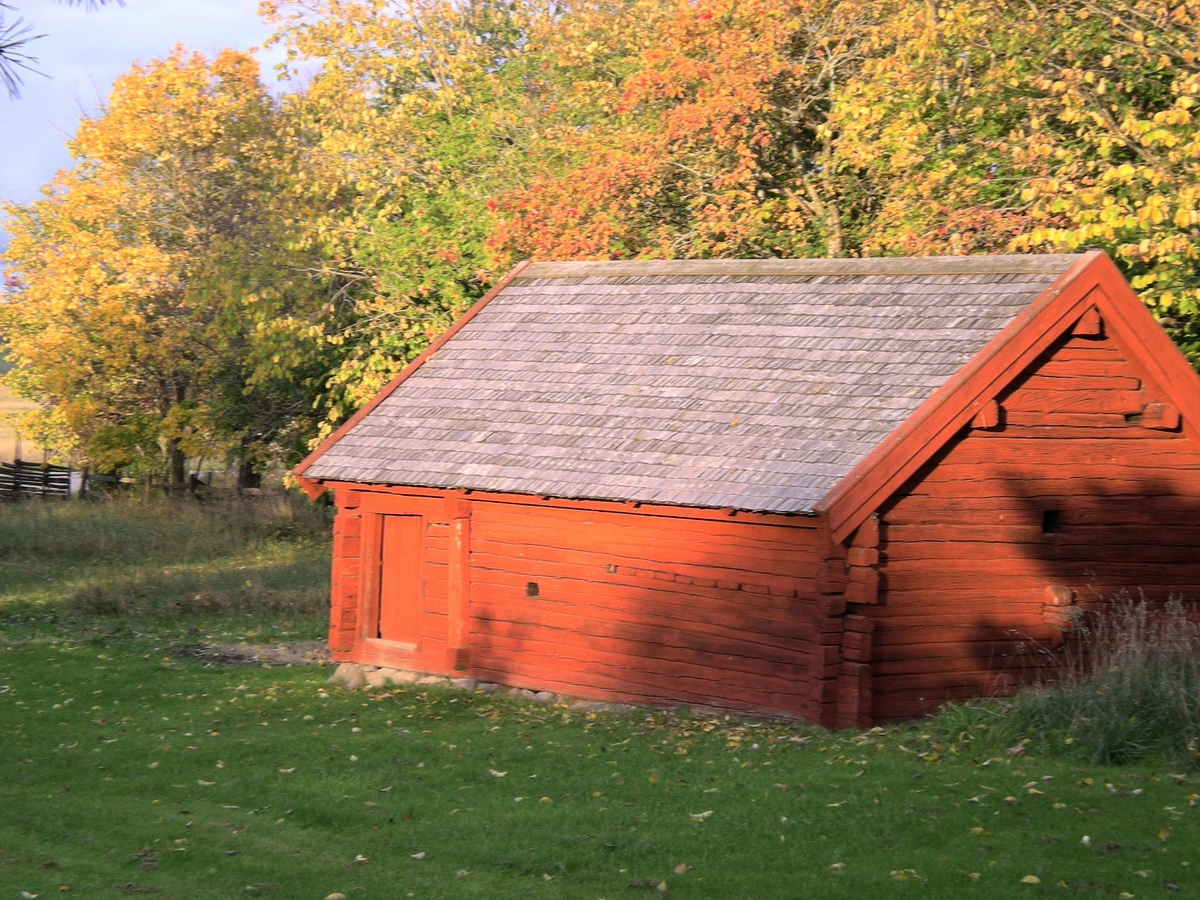
Bastu vid friluftsmuséet Disagården, Gamla Uppsala, Uppland 2 oktober 2008
Hjelm, Tim
The picture has been taken in connection with the summer season at the open-air mosque Disagården 2008. House 23: Sauna. Inninge, Stavby parish. The second half of the 18th century. The sauna has been used for many different purposes - drying of grain, malt and flax and smoking of meat and pork. The house number refers to the Booklet of the Upplandsmuseet: Disagården is a piece of upland cultural history told through houses and plantations, furnishings and objects. The archipelago is part of the upland cultural history told through houses and farms, furnishings and objects. Here the visitor gets an insight into how people lived in rural areas in the later part of the 18th century. Through the village the village meanders and along it are three farms with hourly boning houses, dwellings and fences. Behind Gränbygården mangården building is a spice and cabbage farm that stands in bloom from mid-July. A piece further away is the forge, the sauna and the small windmill. In the hot days of the summer, the rose sheep are usually in the shade under the eel tree next to the mill. A little further up the village street is a manor building from Bärby I Östervåla parish. In it there is a festive hall with a decorated interior from 1824 with portraits of Queen Kristina, Virgin Mary and Martin Luther, among others. The painting is executed by the folk artist Hans Wikström. Just outside the village, a small path leads up to the newly erected soldier.
Sign in to order prints, canvas, and more of this work. Browsing and full-resolution downloads stay free.